
Why Do I Pull Away From People? Understanding the Withdrawal Pattern
Updated: Apr 28
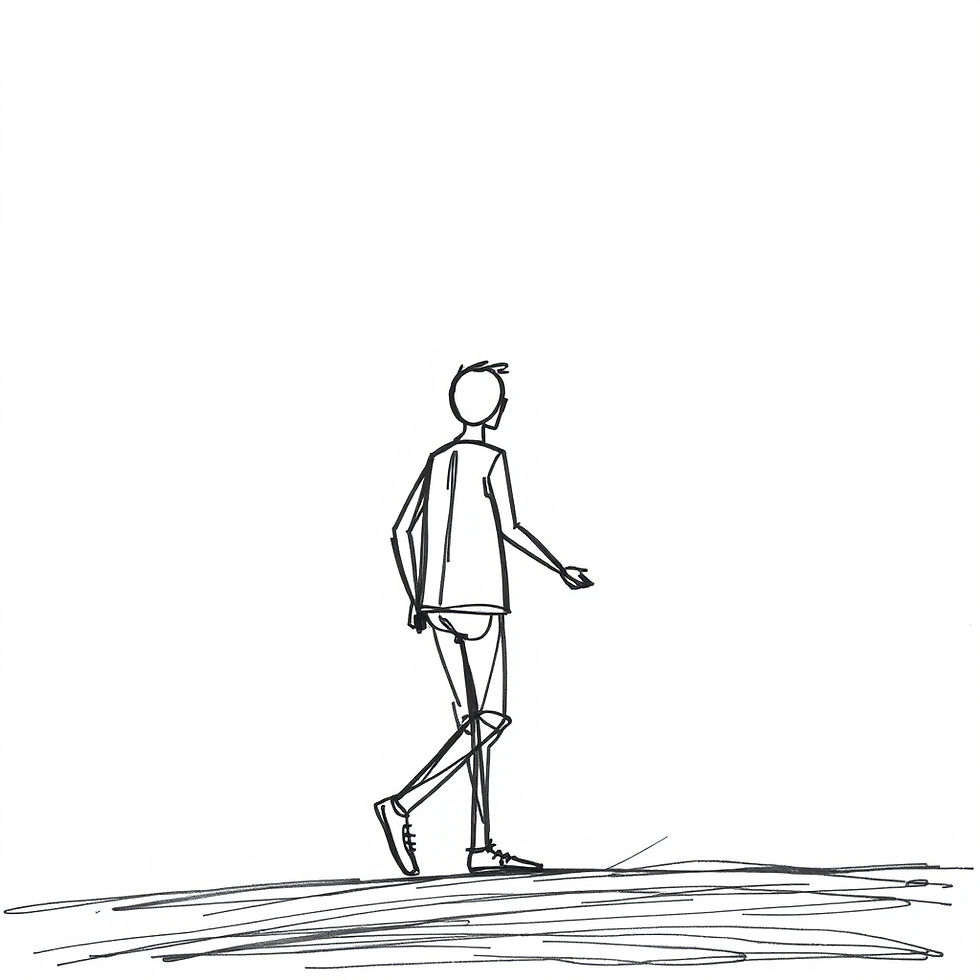
Why do I pull away from people?
Pulling away from people often isn’t about not caring.
It’s a pattern where connection is wanted, but at a certain point begins to feel difficult to stay in.
The pull toward disappearing
She cancelled forty minutes before she was due to leave.
She’d been looking forward to it earlier in the week. But somewhere around six o’clock, the thought of getting there, being present, being responsive for two hours, began to feel heavier than expected.
She sent a message. Not well, she said.
The relief was immediate.
The guilt came later.
Wanting connection and pulling away at the same time
She cared about the friendship. That was the part hardest to explain.
The wanting of connection and the turning away from it happening at the same time.
As though the same thing produced both the hunger and the inability to move toward it.
Where the withdrawal pattern comes from
The withdrawal pattern develops in environments where closeness felt, at some level, costly.
A parent whose emotional needs took up the space.A family where it felt safer to stay contained.An early sense that being known carried risk.
The system adapts by regulating proximity.
Not through conscious choice, but through a learned response that manages how close things can get.
How withdrawal shows up in adult life
In adult life, this pattern often looks like:
cancelling plans at the last minute
needing distance after periods of closeness
feeling warm and engaged, up to a point
a sudden pull to retreat that feels hard to override
guilt after pulling away
From the outside, it can look confusing.
For the person inside it, it feels consistent.
Withdrawal is often misunderstood
The withdrawal pattern is often mistaken for introversion.
But introversion is about recharging.
Withdrawal is about safety.
That difference matters, particularly in relationships where others may experience the distance as personal.
What sits underneath withdrawal
Underneath the pattern is often a quieter layer.
A wish for connection that feels difficult to reach from where the person is standing.
This is why the pattern can feel conflicted — wanting and pulling away at the same time.
How therapy helps the withdrawal pattern
Therapy doesn’t focus on forcing contact or pushing past the system.
It begins with recognising the pull to retreat as a strategy.
Something that made sense at one point, and can be understood differently now.
From there, the relationship with closeness can begin to shift.
Understanding the withdrawal pattern
The withdrawal pattern is one of six patterns in the Adaptive Pattern Model, developed by Gem Thomson, BABCP-accredited psychotherapist at Connection Psychotherapy.
It often appears alongside the vigilance pattern — one part monitoring, another stepping back.
If this feels familiar, you can explore it further:
Read the full version → https://www.connection-psychotherapy.com/understand-your-patterns

Explore all six patterns → https://www.connection-psychotherapy.com/emotional-patterns-quiz


Comments